
Smart Automatic Aluminum Doors for Commercial Buildings | Gilgen Bangalore
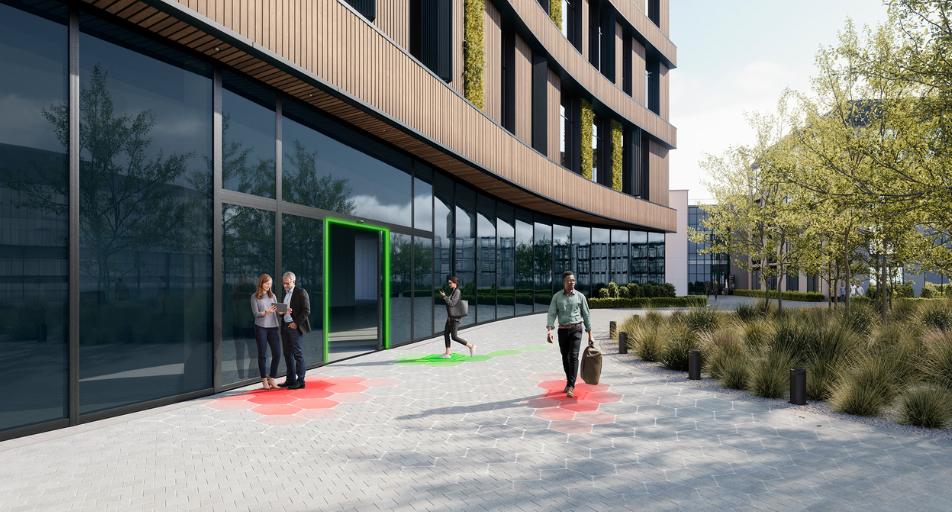
Smart Automatic Aluminum Doors for Commercial Buildings
If you’ve been asked to shortlist automatic aluminium door systems for a new building or a retrofit, you’ve probably noticed how many products claim to be “smart” without much explanation of what that actually means. Some are genuinely intelligent — they learn traffic patterns, talk to your access control system, and reduce energy loss. Others are just a sensor bolted onto an old sliding door.
This guide is written for architects, facility managers, and property owners in Bangalore who need to make a real decision, not just read another product description. We’ll cover how smart automatic doors work, where they make sense, what they cost to own over time, the mistakes we see most often on Bangalore sites, and the safety standards your installer should be following. By the end, you’ll know exactly what questions to ask any vendor — including us.
1. What Makes an Automatic Aluminum Door “Smart”
A door earns the label “smart” when it does more than open and close on a sensor trigger. True smart entrance systems typically include:
- Programmable logic controllers that adjust behaviour by time of day, occupancy, or weather
- Integration with building automation systems, fire alarms, and access control
- Data logging for footfall counts, fault history, and usage patterns
- Remote diagnostics that flag a failing part before it becomes a breakdown
- Touchless activation using radar or infrared presence detection instead of simple motion sensors
A door that only opens when someone walks toward it is automated. A door that also tells your facility team it’s due for a belt replacement, locks down automatically during a fire alarm, and reports daily footfall to your BMS dashboard — that’s a smart automatic door.
2. How Smart Entrance Systems Actually Work
Most systems rely on three layers working together.
Sensing layer — Radar, infrared, or microwave sensors detect presence and movement direction. Better systems distinguish between someone walking past the door and someone walking toward it, which cuts down on unnecessary openings and heat loss.
Control layer — A microprocessor-based controller interprets sensor data and decides how the door should behave: opening speed, hold-open time, partial opening for low-traffic hours, and emergency behaviour during a fire or power failure.
Integration layer — This is what separates a smart door automation setup from a standalone unit. The controller can talk to your access control system (card or biometric readers), your fire panel, and sometimes your BMS, so the door becomes part of the building’s overall logic rather than an isolated fixture.
Expert Tip: Ask any vendor whether their control unit supports open protocols (like Modbus or BACnet) for BMS integration, or whether it’s a closed system. Closed systems are cheaper upfront but expensive to expand later.
3. Types of Smart Automatic Doors
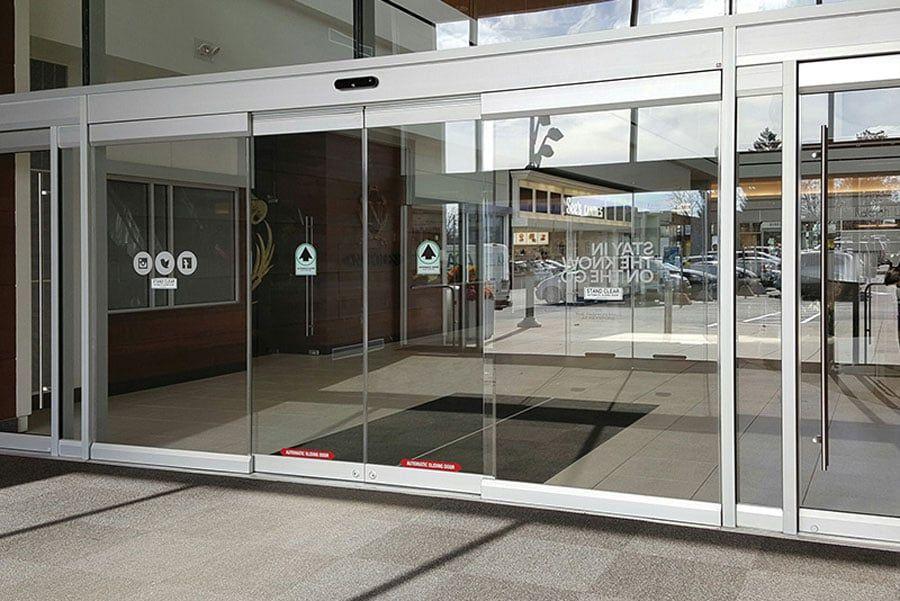
Automatic Sliding Doors
The most common choice for retail entrances, hospital lobbies, and office receptions. They handle high foot traffic well and take up minimal floor space since the door slides parallel to the wall.
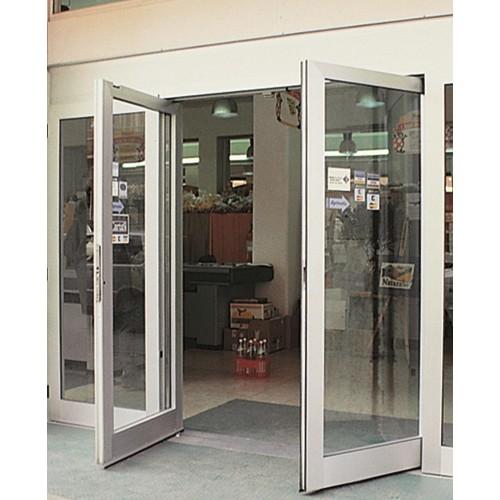
Automatic Swing Doors
Better suited to lower-traffic entrances or where a wider clear opening is needed, such as hospital wards moving beds and trolleys. Swing operators can also be retrofitted onto existing manual doors in many cases.
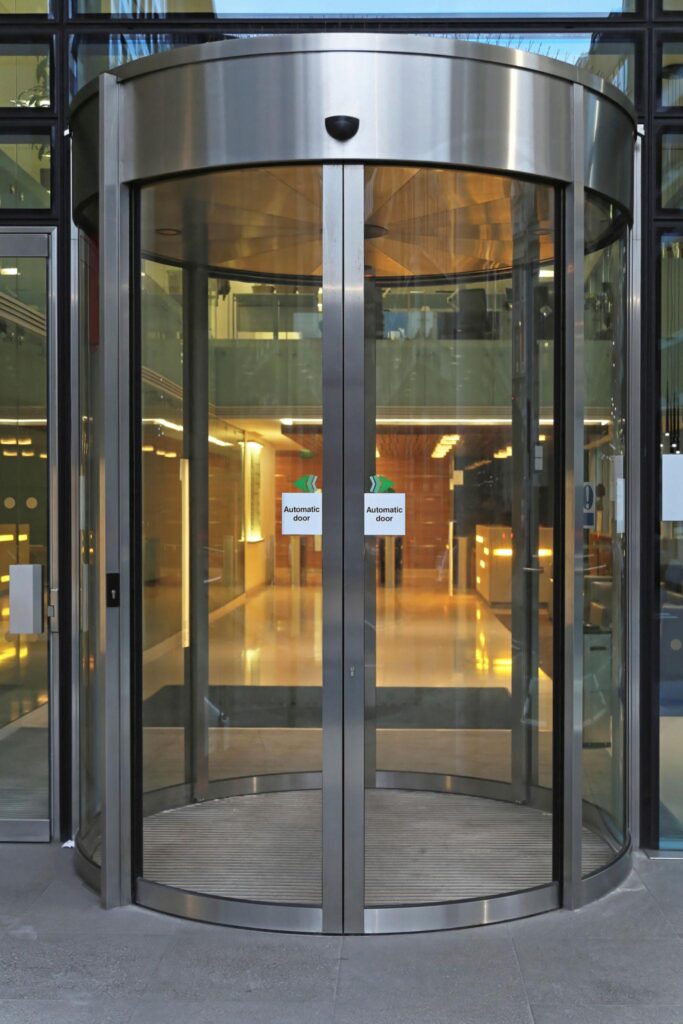
Revolving Doors
Common in five-star hotels and large corporate lobbies in Bangalore’s IT corridor. They manage airflow and temperature loss far better than sliding doors, which matters for energy costs in large glass-façade buildings.
Automatic Folding and Telescopic Doors
Used where opening width needs to be maximised without a large footprint — think airport terminals or wide mall entrances.
4. Smart Doors vs Traditional Automatic Doors
| Feature | Traditional Automatic Door | Smart Automatic Door |
|---|---|---|
| Activation | Basic motion sensor | Radar/infrared presence detection |
| BMS Integration | Rare or none | Standard on most modern systems |
| Fault Diagnostics | Manual inspection only | Remote alerts, usage logs |
| Energy Management | Fixed open/close cycle | Adjusts to traffic and weather |
| Access Control Integration | Limited | Card, biometric, app-based entry |
| Maintenance Approach | Reactive | Predictive, based on usage data |
| Typical Lifespan (with AMC) | 8–10 years | 10–15 years |
5. Where Smart Automatic Aluminum Doors Make the Most Sense
Not every entrance needs the full feature set. Here’s how demand typically breaks down by building type:
- Hospitals — Touchless operation, wide clear openings for stretchers, and fire-safety integration are non-negotiable. Infection control guidelines increasingly favour radar-based touchless automatic doors over push-button systems.
- Hotels — Revolving doors or automatic sliding doors at the main entrance, paired with swing doors at service and back-of-house entrances.
- Airports and Metro Stations — High-cycle, heavy-duty operators built for continuous use, often running well over 100,000 cycles a year.
- IT Parks and Corporate Offices — Access-control integration matters more than aesthetics here; the door needs to work with the building’s card system and visitor management software.
- Shopping Malls and Retail — Wide sliding or folding doors that handle peak-hour crowds without lag, plus energy-efficient operation during Bangalore’s warmer months.
- Educational Institutions — Simpler, rugged systems with an emphasis on child-safety sensors and low maintenance overhead.
- Industrial Facilities — Often paired with dust or temperature-controlled environments, requiring sealed automatic door systems rather than standard commercial units.
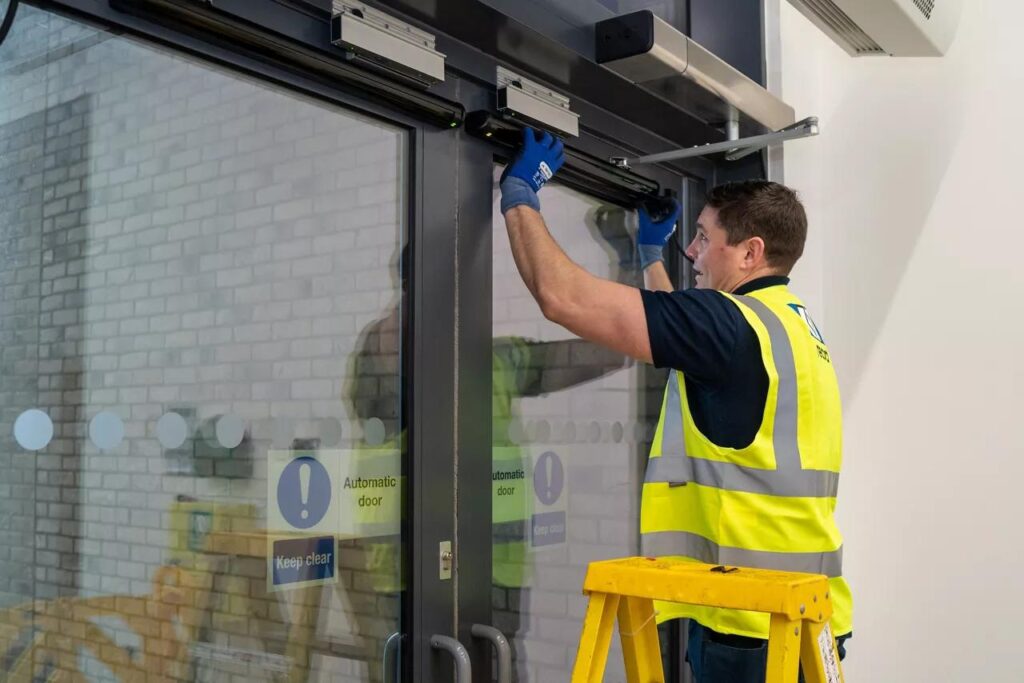
6. Installation Considerations for Bangalore Buildings
Bangalore’s mix of older core-area buildings and newer IT-park construction creates two very different installation scenarios.
Retrofit projects (common in MG Road, Indiranagar, and older commercial stretches) often have non-standard door openings, uneven flooring, or structural headers that weren’t designed for an automatic operator’s weight. A site survey before quoting is essential — we’ve seen vendors quote off floor plans alone and then discover the header needs reinforcement on installation day.
New builds (common in Whitefield, Electronic City, and the ORR IT corridor) generally have more flexibility, but coordination with the glazing contractor and electrical contractor needs to happen early. Automatic door operators need a dedicated power supply and, for BMS-integrated systems, network cabling planned into the entrance lobby before false ceilings go up.
Bangalore’s dust levels during dry months and monsoon moisture during the rains both affect sensor performance and track wear, so weatherproofing and sensor calibration matter more here than in drier climates.
Expert Tip: For ground-floor entrances facing open areas or parking, ask your installer about wind-load ratings on the door operator. Bangalore’s pre-monsoon gusts can strain lightweight sliding systems not rated for it.
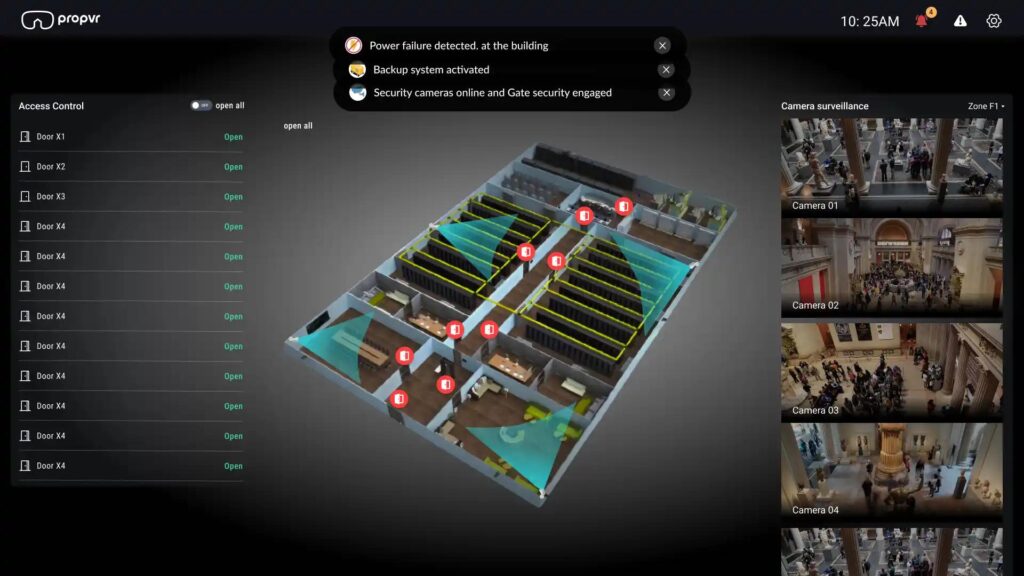
7. Safety Standards and Compliance
Automatic doors sit at the intersection of convenience and safety risk, particularly in high-footfall commercial buildings. A few things worth knowing:
- Door sensors should meet recognised safety sensing standards to prevent entrapment, with both presence and safety (activation) zones properly configured.
- Fire-rated entrances need automatic doors that fail-safe into an open or unlocked position during a fire alarm trigger, in line with National Building Code of India (NBC) fire safety provisions.
- Accessibility matters too — door opening force, timing, and clear width should accommodate wheelchair users and people with mobility limitations, consistent with accessibility guidelines for public buildings.
- Glass used in automatic door assemblies should meet relevant BIS safety glazing standards to reduce injury risk from breakage.
Compliance isn’t just a checkbox for occupancy certificates. In hospitals and malls specifically, insurers increasingly ask for documentation showing the entrance systems meet fire and accessibility codes.
8. Maintenance and AMC Considerations
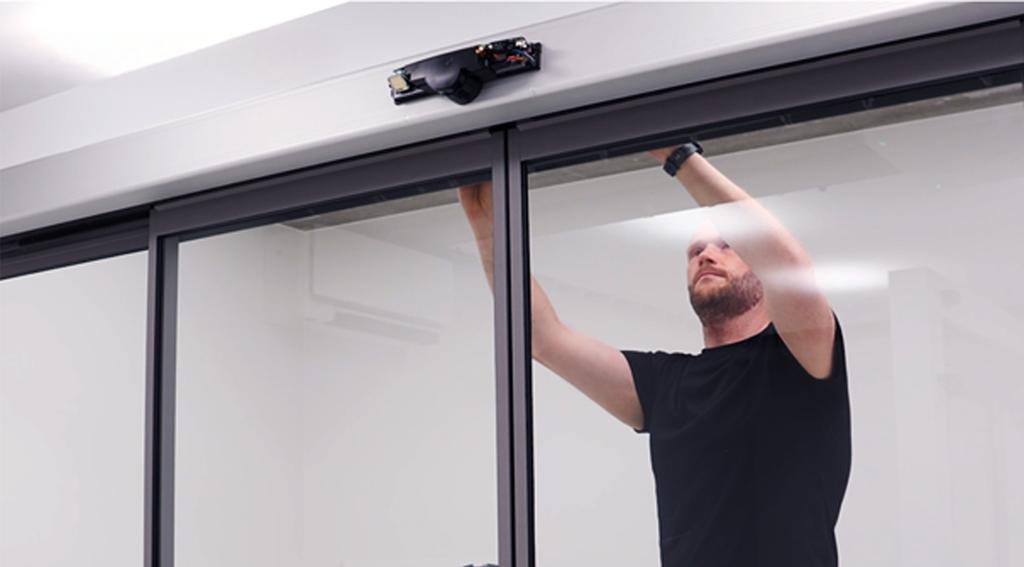
Smart automatic doors reduce maintenance surprises, but they don’t eliminate the need for a maintenance plan. What a solid AMC (Annual Maintenance Contract) should cover:
- Scheduled inspection of belts, rollers, and tracks (quarterly is typical for high-traffic sites)
- Sensor recalibration, especially after any nearby construction or signage changes that could interfere with detection zones
- Firmware updates for the control unit, particularly on BMS-integrated systems
- Emergency call-out response times, clearly defined in the contract
- Spare parts availability — ask how long the vendor stocks parts for the specific model you’re buying
A door that logs its own usage data makes preventive maintenance far easier, since a facility manager can see wear trends instead of waiting for a failure. This is one of the practical, measurable advantages smart systems have over basic automatic doors.
Expert Tip: Get response-time commitments in writing, not verbally. A hospital or airport entrance stuck open or shut isn’t just an inconvenience — it’s a security and safety issue.
9. Cost Factors and ROI
Pricing for smart automatic doors varies widely based on type, size, and integration requirements. Broadly, the factors that move the number are:
- Door type — Sliding is generally the most economical; revolving doors and heavy-duty folding systems cost more due to structural and motor requirements.
- Opening width and weight — Wider openings need heavier-duty operators and stronger headers.
- Integration depth — A standalone door costs less than one wired into access control, fire alarm, and BMS systems.
- Glazing and framing — Toughened or laminated safety glass, and framing material (aluminium vs stainless steel), affect both cost and lifespan.
- Site conditions — Retrofits with structural modifications cost more than new-build installations with planned openings.
On ROI, the calculation isn’t just energy savings, though that’s real — a door that only opens for genuine approach traffic reduces conditioned-air loss meaningfully in glass-façade buildings. The bigger ROI driver for most commercial owners is downtime avoidance: predictive maintenance and remote diagnostics reduce the frequency and cost of emergency repairs, which is where reactive systems bleed money over a 10-year ownership period.
10. Common Mistakes We See on Commercial Projects
- Choosing door type based on price alone, without accounting for daily cycle count. A sliding door rated for 200,000 cycles a year installed at a metro station with double that traffic will fail early.
- Skipping the site survey. Header strength, floor levelness, and power availability all affect installation cost and timeline; assuming standard conditions leads to change orders mid-project.
- Underestimating sensor placement conflicts. Nearby signage, planters, or reception furniture can trigger false activations or block detection zones.
- Ignoring fire-safety fail-mode requirements until the fire inspection, when the door’s default behaviour during an alarm doesn’t meet code and needs reprogramming or replacement.
- Signing a low-cost AMC with vague response times, then discovering during a breakdown that “next business day” wasn’t acceptable for a 24-hour hospital entrance.
- Not planning cabling for BMS integration before ceiling and wall finishing, which turns a simple network connection into an expensive retrofit.
11. Selection Tips Before You Buy
- Match the door’s rated cycle count to your actual expected daily traffic, not an estimate.
- Ask for reference sites of a similar building type — a mall vendor reference doesn’t tell you much about hospital-grade performance.
- Confirm whether the control unit uses an open communication protocol if you plan any future BMS integration.
- Check the manufacturer’s spare parts availability window, especially for imported components.
- Request the AMC terms and response-time SLA in writing before signing the purchase order, not after.
- Ask specifically how the door behaves during a power failure and during a fire alarm trigger — this should be demonstrable, not just stated in a brochure.
12. Industry Trends in Building Automation
A few shifts worth watching if you’re planning entrance systems for the next few years:
- Touchless activation as a baseline expectation, not a premium add-on, particularly in healthcare and hospitality.
- Deeper BMS integration, where entrance data feeds into broader building automation systems for energy reporting and occupancy analytics.
- Predictive maintenance software becoming standard rather than optional on mid-to-premium commercial systems.
- Energy codes tightening around glazed entrances in commercial buildings, pushing demand for doors that minimise open-time and air loss.
Gilgen: Where We Fit In
We’ve worked on automatic aluminum door installation, modernization, repair, and AMC contracts across hospitals, IT parks, hotels, and retail sites in and around Bangalore. Our approach starts with a proper site survey — not a quote off a floor plan — because that’s where most of the mistakes above get avoided before they happen. Whether you need a single entrance retrofitted or a full automated entrance solution planned into a new commercial build, our team can walk your site and give you a realistic scope, timeline, and cost before you commit to anything.
FAQs
1. What’s the difference between an automatic door and a smart automatic door?
A basic automatic door opens on a motion trigger. A smart automatic door adds diagnostics, BMS or access-control integration, and adjustable behaviour based on traffic, time, or emergency conditions.
2. Are smart automatic doors worth it for a small retail store?
For a single small entrance, the ROI depends on traffic volume and whether energy loss is a real cost concern. A straightforward automatic sliding door may be sufficient without full smart integration.
3. How long do automatic door systems typically last?
With a proper AMC, most commercial systems run 8–15 years depending on door type, cycle count, and how well sensors and mechanical parts are maintained.
4. Can existing manual doors be converted to automatic operation?
Often yes, particularly for swing doors, provided the frame and header can support the operator’s weight. A site survey confirms feasibility before quoting.
5. What happens to automatic doors during a power failure?
Compliant systems are designed to fail-safe — typically unlocking or opening — so occupants aren’t trapped. This should be confirmed and tested during installation, not assumed.
6. Do automatic doors need to be fire-rated?
Entrances located on designated fire escape routes or within fire-rated partitions need doors that meet applicable fire safety behaviour under NBC provisions. Not every entrance requires this, so it’s worth confirming with your fire consultant.
7. How often should automatic doors be serviced?
High-traffic sites like hospitals and malls generally need quarterly inspections. Lower-traffic commercial entrances can often go on a bi-annual schedule, but this should be based on actual cycle counts, not a fixed calendar.
8. What causes most automatic door breakdowns?
Worn belts and rollers, sensor misalignment, and dust or debris in tracks account for the majority of service calls we see, most of which predictive maintenance can catch early.
9. Can smart automatic doors integrate with existing access control systems?
Yes, most modern control units support integration with card readers, biometric access, and visitor management systems, though compatibility should be confirmed for your specific access control brand.
10. How do I get a quote for automatic doors in Bangalore?
The most accurate quotes come after a site visit, since opening size, structural conditions, and integration requirements all affect pricing. Gilgen offers site surveys across Bangalore before providing a formal quote.
Conclusion
Choosing smart aluminium automatic doors isn’t really about picking the flashiest feature list. It’s about matching door type, control intelligence, and maintenance planning to how your building actually gets used — daily traffic, safety requirements, and how much downtime you can tolerate if something goes wrong. Get the site survey right, ask the safety and integration questions upfront, and put maintenance terms in writing, and the door will do its job quietly for a decade or more.
If you’re evaluating options for a hospital, hotel, IT park, mall, or any commercial site in Bangalore, Gilgen can walk your site, assess what’s realistic for your entrance, and put together a proposal that accounts for the building conditions specific to your location — not a generic quote. Get in touch for a site assessment and a straightforward cost estimate.