
Automatic Sliding Doors vs Automatic Swing Doors: Which Is Right for Your Building?
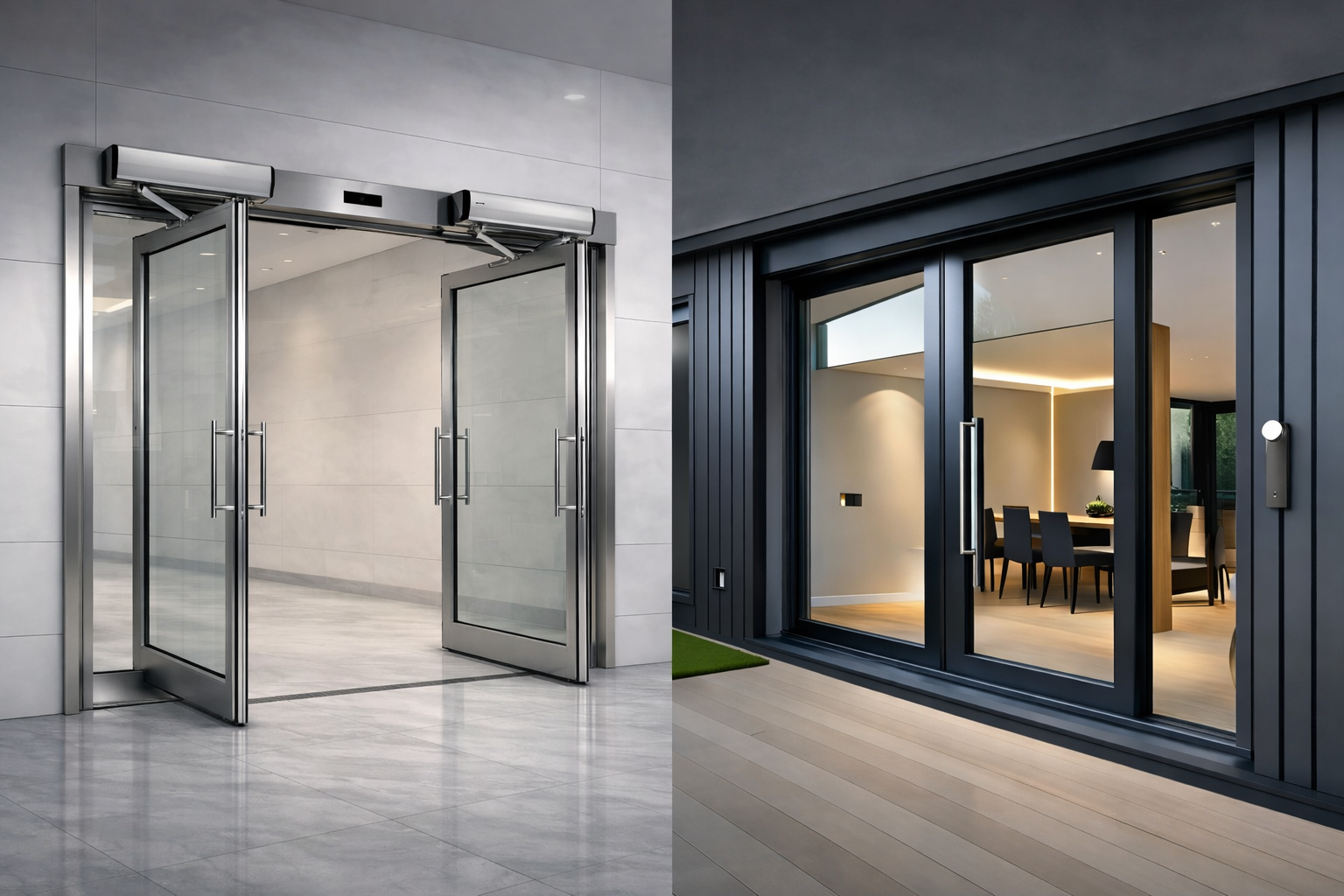
When planning a new building or upgrading an existing entrance, choosing the right door system can have a bigger impact than most people expect. The entrance is one of the first things visitors interact with, and it directly affects accessibility, safety, energy efficiency, and traffic flow.
Many architects, facility managers, hospital administrators, and commercial property owners often face the same question: should they choose automatic aluminium sliding doors or automatic swing doors?
While both solutions offer convenience and modern functionality, the right choice depends on your building's layout, usage, and operational requirements. Making the wrong decision can lead to unnecessary maintenance costs, inefficient traffic movement, and a poor user experience.
In this guide, we'll break down the key differences to help you determine which solution best suits your facility.
Understanding Automatic Sliding Doors
Aluminium sliding doors operate by moving horizontally along a track when a person approaches. Using advanced sensors, the doors open and close automatically without requiring physical contact.
These systems are commonly seen in hospitals, shopping malls, airports, hotels, corporate offices, and other high-traffic environments.
Advantages
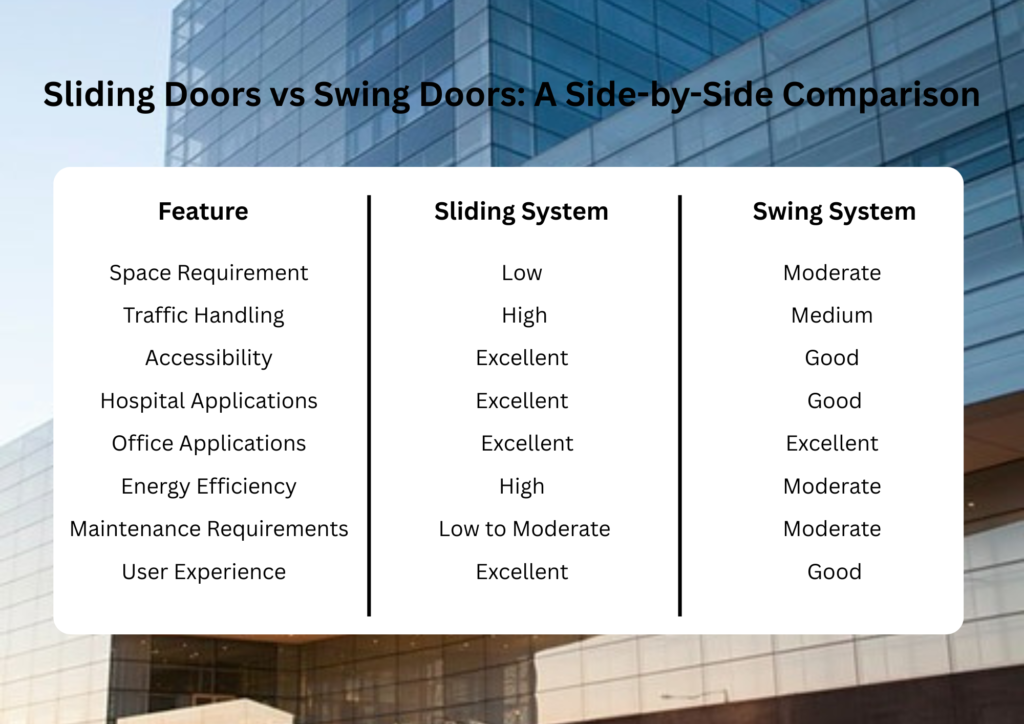
One of the biggest benefits of sliding aluminium door systems is their ability to manage large volumes of foot traffic efficiently. Because the panels move sideways rather than swinging open, they maximize available space and allow smooth movement in both directions.
Other advantages include:
* Improved accessibility for wheelchair users and elderly visitors
* Reduced energy loss through controlled opening and closing
* Modern and professional appearance
* Better traffic flow during peak hours
* Hands-free operation that supports hygiene standards
Limitations
Although they offer excellent functionality, they require sufficient wall space for the panels to slide. Installation costs may also be slightly higher depending on the size and complexity of the project.
Understanding Automatic Swing Doors
Automatic swing doors function similarly to traditional hinged doors but are equipped with automation technology that allows them to open and close without manual effort.
These systems are often installed in office buildings, educational institutions, healthcare facilities, and locations where retrofitting an existing entrance is preferred.
Advantages
Swing door automation offers flexibility and can often be integrated into existing door structures.
Benefits include:
* Suitable for renovation projects
* Adaptable to various building layouts
* Reliable and durable operation
* Lower structural modification requirements
* Easy integration with access control systems
Limitations
Because the door requires space to swing open, it may not be ideal for entrances with limited clearance. In high-traffic environments, it may also be less efficient than sliding alternatives.
Which Option Is Better for Hospitals?
Healthcare facilities require smooth movement of patients, visitors, staff, and medical equipment throughout the day.
For this reason, hospital automatic door systems frequently utilize sliding technology at main entrances, emergency departments, diagnostic centers, and patient wards.
The ability to provide touch-free access helps improve hygiene while supporting efficient traffic management. In sensitive environments such as operation theatres and clean rooms, specialized hermetic sliding solutions are often preferred because of their superior sealing capabilities.
For most healthcare projects, sliding systems remain the practical choice.
Which Door Is Best for Office Buildings?
Modern office environments prioritize accessibility, efficiency, and professional aesthetics.
The best automatic door for office buildings depends largely on entrance size and daily traffic levels.
For corporate headquarters and busy commercial complexes, sliding solutions provide a seamless experience for employees and visitors. They create an open, welcoming entrance while efficiently handling peak-hour traffic.
For smaller offices with lower footfall, automated swing systems may offer a cost-effective alternative without compromising convenience.
The ability to provide touch-free access helps improve hygiene while supporting efficient traffic management. In sensitive environments such as operation theatres and clean rooms, specialized hermetic sliding solutions are often preferred because of their superior sealing capabilities.
For most healthcare projects, sliding systems remain the practical choice.
What Works Best for Hotels?
Hotels focus heavily on first impressions and guest experience.
Guests often arrive carrying luggage, pushing carts, or managing multiple bags. An entrance that opens automatically enhances convenience and creates a premium experience from the moment they arrive.
Sliding systems are commonly chosen for hotel lobbies because they allow smooth movement while maintaining climate control inside the building.
Which Solution Is Better for Retail Stores?
Retail environments experience fluctuating traffic throughout the day.
Stores, shopping centres, and showrooms benefit from entrances that encourage easy customer access while maintaining a comfortable indoor environment.
Many retail businesses choose commercial automatic doors that can handle continuous operation while helping reduce energy loss caused by frequently opened entrances.
For large retail spaces and malls, sliding systems are generally the preferred option due to their ability to accommodate heavy customer traffic.
Cost Comparison
Cost is often one of the first factors businesses consider when evaluating entrance automation.
The total investment depends on several variables, including:
* Door size
* Glass specifications
* Safety sensor requirements
* Access control integration
* Building layout
* Installation complexity
In many cases, swing systems can offer lower initial installation costs, particularly when retrofitting existing entrances.
However, larger facilities often find that sliding systems provide greater long-term value through improved efficiency, traffic management, and user experience.
Rather than focusing solely on upfront costs, decision-makers should evaluate the total lifecycle value of the solution.
Maintenance Comparison
Both systems require routine servicing to ensure reliable operation.
Sliding systems typically involve track inspections, sensor calibration, and roller maintenance.
Swing systems require periodic checks of hinges, operators, and safety mechanisms.
Regular preventive maintenance significantly reduces downtime and extends the lifespan of both solutions.
For facilities with high daily usage, scheduling professional inspections at least twice a year is recommended.
How to Make the Right Choice
There is no one-size-fits-all answer.
Your decision should be based on:
* Building type
* Available entrance space
* Daily traffic volume
* Accessibility requirements
* Security needs
* Budget considerations
If your facility experiences heavy pedestrian traffic and requires maximum efficiency, sliding systems are usually the better choice.
If you’re upgrading an existing entrance or working with space constraints that favour hinged operation, a swing solution may be more appropriate.
Businesses exploring automatic door systems Bangalore should work with experienced specialists who can assess their site requirements and recommend the most suitable solution for long-term performance.
Final Thoughts
Both technologies offer significant advantages over traditional manual entrances. The key is understanding how your building operates and selecting a system that aligns with your operational goals.
Whether you’re managing a healthcare facility, corporate office, hotel, retail store, or industrial property, investing in the right entrance solution improves accessibility, efficiency, safety, and user experience.
Before making a decision, consider your traffic patterns, available space, maintenance expectations, and future growth plans. The right choice today can continue delivering value for many years to come.
Frequently Asked Questions
Sliding systems are generally more effective in high-traffic environments because they allow continuous movement of people without creating bottlenecks.
Yes. They are widely used in healthcare facilities because they improve accessibility, hygiene, and operational efficiency.
Absolutely. Modern solutions can be connected to card readers, biometric systems, security software, and visitor management platforms.
Sliding systems typically provide better sealing and faster closing times, helping reduce air leakage and energy loss.
Yes. Both options are designed to improve accessibility and support compliance with accessibility standards.
Professional maintenance is recommended at least twice a year, although high-traffic facilities may require more frequent inspections.
With proper maintenance, quality systems can remain reliable for 10 to 20 years or longer.
Yes. Many facilities successfully retrofit automated solutions into existing entrances without major structural modifications.
Sliding systems generally require less operational space because the panels move sideways instead of swinging open.
The best approach is to evaluate your building’s traffic levels, available space, accessibility needs, and operational requirements with the help of an experienced entrance automation specialist.